

Buck Hollow Sporting Goods - click or touch to visit their website Midwest Habitat Company

Edge Feathering / Switchgrass Field Buffer Project - In Photos

Bassattackr

Well-Known Member
Follow along as I walk through an edge feathering and switchgrass field buffer project in Central MO.

Goals for the project are:

- Screening for me to get in / out of stands without being detected.
- Screening for the deer, between woods and field so bucks have to come out into the field to see all other deer.
- Creating nearby escape cover, so deer feel more comfortable using in daylight hours.
- Manipulate the food plot shape, to steer the deer by my stands, keep them in bow range.
- Increase in cover for turkeys, quail, rabbits and deer fawns.
- Reduce, remove field erosion (in this particular case) on low hillside.

June 2023 - Seed Switchgrass Edge

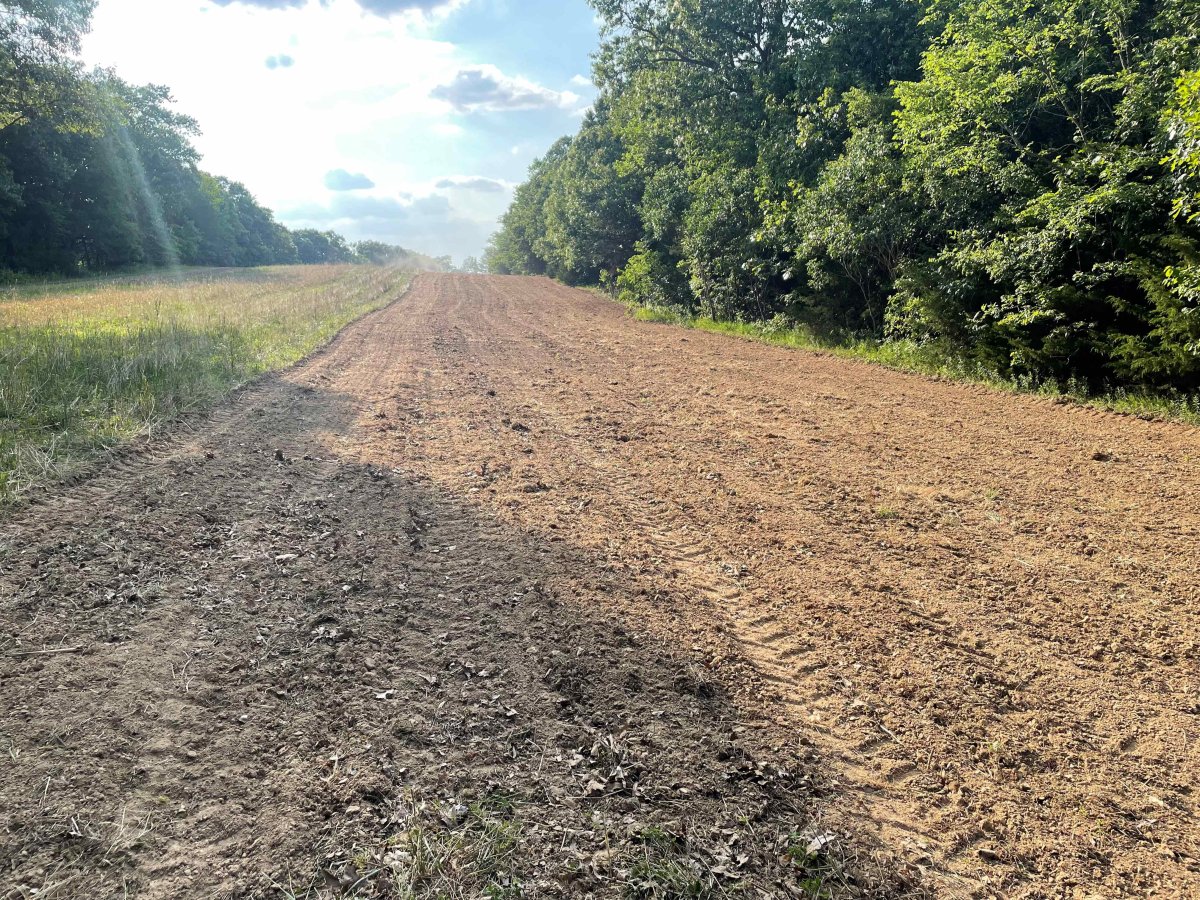
Seeded switchgrass in a 20 yard buffer along low hillside off of field. Switchgrass was a mixture of Real World (Alamo?) and RC Big Rock. Approx 8-10# / acre. In order: Disc / pack / broadcast seed / pack.

Note the lack of edge on the right side of the photo, a virtual wall separating the field and woods.
1 - Switch Edge.jpg
 
Last edited:
July 2025

By the second year, the buffer is a dirty edge of switchgrass, ragweed and other natives. Exactly what I had hoped for.

No weed control was used. Seeded the switchgrass in June 2023 and walked away.

2a - Switch Edge.jpg


August 2025 - Mark Edge Feathering

Local forester marked trees for edge feathering. SOP for edge feathering typically calls for marking trees within 10-15 yards from the field edge into the woods.

Marking was on trees with no timber value. Anything with timber value would remain.

Intent would be to cut cleanly, not hinging anything. From MDC:


2 - Switch Edge.jpg
 
Last edited:
December 2025

Update shows switchgrass over 5-6' high along low edge (right side of photo). Already kicking out rabbits. Noted increase use of deer in field in daylight hours.

Due to lack of weed control, not a solid stand of switchgrass. The mosaic of variety was what I was hoping to see.

3 switch edge.jpeg


Low side is marked for edge feathering by forester.

Jan / Feb 2026

- Burn the switchgrass edge, from the green field into edge feather zone, approx. 20-30 yards off the visible field edge.
- Once burn is complete, will drop (marked) trees out into burnt switch edge.
- Will not treat stumps, so expect regrowth for most everything except cedars. A little extra browse and cover.

**Predominant tree species are red/white oaks, hickory and gray dogwood, sassafras (understory species)
 
Last edited:
Good work what was the logic of cutting off the stump vs hinge cutting?

I don't really see the upside to hinge cutting to be honest. In my experience, it just creates a mess that nothing can get through.

Clean cutting will allow the tops to decay while the stumps still sprout. Future burns could clean them up. Also allows more sunlight to the forest floor, what you want for forb, shrub growth.

In this particular project, the marketable timber was left. Clean cutting allows us to integrate TSI into the edge feather. Some will die of course.
 
Last edited:
Jan 18, 2026

Review of marked timber shows fairly hard edge between woods and field.

EF 2.jpeg


Even fairly larger stuff (with limited to no timber value) marked. Quite a few cedars have encroached the field with time. As many know, cedars are a pioneer species, often indicating what was once a field.

One can also see the lack of sunlight or biological desert, only a few feet into the canopy..

EF 4.jpeg
 
Thanks for sharing pics. Always great having a visual and getting to see what other guys are referring to when they say this or that.

Bassattackr - I really enjoy your posts, you have a lot of cool things going on
 
Feb 13, 2026

Last view of the low edge before putting a drip torch to it..

Burn 1.jpeg


Rolled a head fire through the switchgrass, and used a backing fire underneath about 30 yards into the timber below. Happy with the results.

Can really see how abrupt the transition is between field and woods..

Burn 2.jpeg


Edge feather marked at the perfect height, above the fire, yet still plainly visible.

Burn 5.jpeg


One last photo, as it was getting dusk.

Burn 6.jpeg
 
So this brings up question you might be able to help me with.in Kansas I did what was called a CP33 bobwhite buffer.It was a strip at least 120ft wide that was in NWSG or switch.Mine grew very well and deer go through it to get to field.I have 20 acres around one field and probably 10 more around other fields.So when it was in the CRP I either had to burn or lightly disc 1/3 of grass.i burned most every year.So now it's just a solid stand of grass with a few trails coming out.I don't want food in there but wouldn't mind some bedding but it is super thick.Thinking about trying to stir up some weed seed along part of it.NRCS required at least 120ft to minimize predators from hunting ground birds.
 
So this brings up question you might be able to help me with.in Kansas I did what was called a CP33 bobwhite buffer.It was a strip at least 120ft wide that was in NWSG or switch.Mine grew very well and deer go through it to get to field.I have 20 acres around one field and probably 10 more around other fields.So when it was in the CRP I either had to burn or lightly disc 1/3 of grass.i burned most every year.So now it's just a solid stand of grass with a few trails coming out.I don't want food in there but wouldn't mind some bedding but it is super thick.Thinking about trying to stir up some weed seed along part of it.NRCS required at least 120ft to minimize predators from hunting ground birds.

Late winter discing will set the grass back, and open up the canopy compared to burning.

The result would be a higher diversity of forbs, etc. as well as brooding cover for poults, etc due to a more open ground the first year. I'm not sure NWSG grass stands can be too thick for deer but others may have different experiences.

Agree on the border thickness. Thicker is better in terms of predator protection.
 
So many stands of grass fall over from snow or wind that they are almost worthless.The poults have trouble getting through them also.It sounds strange but I think I need to thin out some of mine and get them weedy. NRCS specified the min f 120ft trying to reduce the ease of small game and birds being hunted in these strips by predators.
 
March 14, 2026

After a good workout all marked trees are down. Quite a bit of cover here.

IMG_4295.jpg


Didn't know we had some nice hardwoods in amongst all those giant cedars.. May go back next winter and fell a few more cedars a bit further in, as time allows.

IMG_4298.jpg


Even with morning sun, there are quite a few sunlight pockets inside this hillside. The afternoon sun will really allow this front edge to explode.

IMG_4299.jpg


IMG_4300.jpg


All in all, very happy. Excited to track the results through this summer, fall.

IMG_4306.jpg
 
Do you think the deer will bed in it? If so how does that effect you accessing plot to hunt?Are planning an entrance route or planting a screen. Looks good I noticed mine has grown out 20 ft since I bought my place. But mine aren't cedars and I will have to spray most of my stumps
 
Do you think the deer will bed in it? If so how does that effect you accessing plot to hunt?Are planning an entrance route or planting a screen. Looks good I noticed mine has grown out 20 ft since I bought my place. But mine aren't cedars and I will have to spray most of my stumps

RE: Bedding - Historically they bed on the hillside below. They could start to bed tighter, right up against this edge by next season.

The growth of this edge will explode, along with the existing 3 year (20 yard wide) switchgrass buffer above it on the field edge. This makes my access even more bulletproof on the opposite side of the field.
 
Top Bottom